
Table of Contents
- Matching Pajama Sets and Coordinating Bridesmaid Looks
- Cute Getting Ready Outfits for Brides: Tops, Tees, and Crop Styles
- Bridal Robe vs Romper for Wedding Day: Which One Wins
- Lace and Satin Details That Make Getting Ready Photos Pop
- How to Style Bridal Getting Ready Photos Without Ruining Hair and Makeup
- Comfortable Loungewear and Getting Ready Accessories for Every Season
- Budget-Friendly DIY Coordination and Post-Wedding Versatility
- Frequently Asked Questions
Last Updated: September 22, 2026
Matching Pajama Sets and Coordinating Bridesmaid Looks
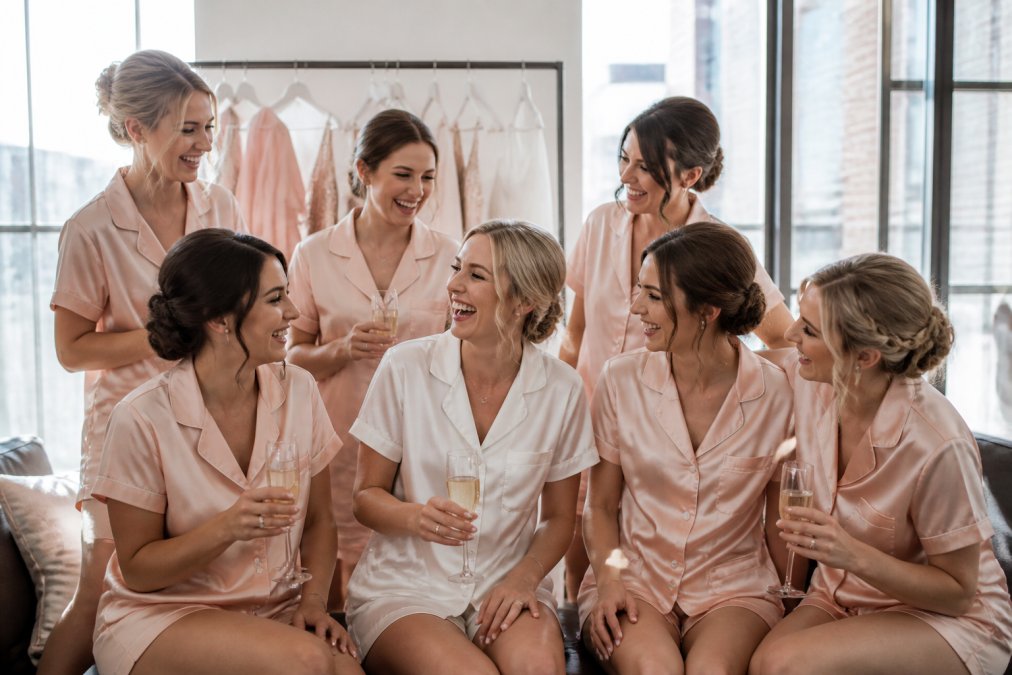
The best getting ready outfits for brides start with one decision: matching pajama sets for the whole crew. Coordinated sets photograph beautifully, keep everyone comfortable through hours of hair and makeup, and double as bridesmaid gifts nobody tosses in a drawer.
How to Coordinate Sizes Across Your Whole Bridal Party
- Ask for current dress size and bust measurement, not weight
- Order one size up for anyone between sizes; satin and cotton blends drape better with room
- Confirm the return window before ordering for a large group
- Ship everything to one address and sort into labeled bags per person
Cute Getting Ready Outfits for Brides: Tops, Tees, and Crop Styles
Tees and crop tops are the most flexible option for a wedding morning, and they solve a practical problem robes don't: nothing slips off your shoulders while you're sitting under a curling iron.
Where to Buy Getting Ready Shirts for Your Crew
Buy from a shop that shows real sizing ranges and real fabric content, not just styled product shots. Check three things before you commit:
- Fabric: cotton or cotton-poly blends breathe; all-polyester shirts trap heat under studio lights
- Size range: anything that stops at XL will leave someone out
- Print placement: chest prints read well in photos; oversized back prints get hidden by hair
Bridal Robe vs Romper for Wedding Day: Which One Wins
Robes win for photos. Rompers win for logistics. The honest answer is that most brides end up wanting both, and the reason comes down to how the morning actually unfolds: you get dressed, you get styled, you eat, you wait, and then you change into the gown. Each outfit type handles a different part of that sequence well.
| Option | Best For | Main Trade-Off | Photo Factor |
|---|---|---|---|
| Satin robe | Gown reveal, glamour shots | Can slip open while seated; needs a cami underneath for coverage | High |
| Button-up pajama set | Full morning coverage, easy removal | Buttons must be undone carefully to avoid snags | High |
| Romper or cami set | Movement, eating, bathroom breaks | Less dramatic in photos; removal requires care | Medium |
| Crop top and shorts | Warm venues, active mornings | Less coverage; not ideal for winter suites | Medium |
How to Time the Outfit Change Around Hair and Makeup
The order of operations matters more than the outfit itself. A common pattern that works well:
- Before styling: Wear the romper, cami set, or loungewear you'll spend the morning in. This is when you eat, hydrate, and move around freely.
- During styling: Stay in the same piece. If your stylist needs access to your shoulders or neckline, choose a style with a wide neck or adjustable straps.
- After final hairspray and makeup set: Change into the button-up or robe for the gown reveal. This is the only change that needs to happen over a finished look, and a button-front piece makes it a two-minute task instead of a twenty-minute risk.
Layering for Coverage and Comfort
Robes and cami sets can leave you feeling exposed in group photos or while seated. A few layering moves solve this without adding bulk:
- Wear a fitted cami or bralette under a satin robe so it stays closed when you sit
- Choose a romper with a built-in shelf bra or pair it with a soft bandeau
- Keep a lightweight cardigan or hoodie nearby for cold suites; it comes off in seconds for photos
- Skip anything with heavy hardware or zippers on the back, which can snag on hair tools and veils
Lace and Satin Details That Make Getting Ready Photos Pop
Texture is what separates a flat getting-ready photo from one that looks styled. Lace trim, satin piping, and tonal embroidery catch light in a way plain cotton doesn't, and they read as intentional even in a quick candid.
How to Style Bridal Getting Ready Photos Without Ruining Hair and Makeup
Getting ready outfits and hair preservation are the same problem, and most guides ignore it. Anything that pulls over your head after styling is a mistake.
A few practical rules that save the morning:
- Schedule the outfit change before the final hairspray, not after
- Keep steamers and irons away from anyone already styled
- Ask your photographer to shoot the detail shots (rings, shoes, invitations) while hair and makeup finish
- Lay out every outfit the night before, sorted by person
Comfortable Loungewear and Getting Ready Accessories for Every Season
Season changes the fabric, not the format. A summer wedding morning in a hot suite calls for lightweight cotton and shorts; a winter morning calls for fleece and layers you can peel off as the room warms up.
Bridal Babe Bachelorette Party Bride →
Budget-Friendly DIY Coordination and Post-Wedding Versatility
Two questions decide whether your getting ready outfits were a good purchase: did they cost more than they needed to, and will anyone wear them again? Most guides answer neither, which is why so many bridal party outfits end up in a donation bin by the following spring.
DIY Coordination Without Matching Sets
You don't need identical sets to get a cohesive look. A common approach is to pick one anchor piece (a robe, a button-up, or a romper) and let the rest of the party mix and match within a tight palette. Here's how that works in practice:
- Choose two or three colors that flatter a range of skin tones: white and blush, ivory and sage, or black and champagne are reliable combinations.
- Assign the bride a distinct shade or print so she reads as the focal point in group shots without needing a different silhouette.
- Let each person pick their own cut (tank, tee, crop, or button-up) in the shared palette. This solves fit issues without special orders.
- Use one unifying detail across the group: a matching hair tie, a small embroidered initial, or the same satin piping on every piece.
Where the Money Actually Goes
At Betrothal Boutique, tees and tanks run from $17.99 to $27.99, which keeps a ten-person order reasonable. Skip custom embroidery if the budget is tight; a printed slogan does the same job for less. The biggest cost traps are:
- Rush shipping on a large order because sizes weren't collected early enough
- Custom sizing when a standard size range already covers the group
- Duplicate pieces bought "just in case" that nobody wears
Choosing Pieces That Survive Past the Wedding
For size-inclusive shopping, check the range before you fall in love with a design. Several Betrothal Boutique tops run S through 5XL, which covers most bridal parties without a special order. If you're coordinating a group with a wide size spread, prioritize shops that show real measurements and fabric content rather than styled product shots alone.
Frequently Asked Questions
What should a bride wear while getting ready?
A button-up or zip-front top is the practical pick because it comes off without dragging across your hair and makeup. Cute getting ready outfits for brides usually pair a loose top with shorts, bike shorts, or a light robe, so you stay cool through hours of hair and makeup. Look for breathable fabric like cotton or a cotton-poly blend. A hoodie works for fall and winter weddings, while a tank or crop top suits summer mornings. Whatever you choose, test it on before the wedding day so nothing feels tight or scratchy in photos.
How do you coordinate getting ready outfits for the whole bridal party?
Pick one color family and one silhouette, then let each person choose the cut that fits her best. Matching pajama sets in the same hue read as coordinated without forcing everyone into an identical garment. Collect sizes early, ideally a month out, and ask each bridesmaid for her usual top and bottom size rather than guessing. Ordering from a brand that carries a real size range, such as S through 5XL, removes most of the fit anxiety. Small touches like the same script print or a shared color tie the group together in photos.
Should the bride pay for getting ready outfits?
It depends on your budget and how you frame the purchase. Many brides treat getting ready tops as a bridesmaid gift, which means the bride covers the cost and hands them out at the rehearsal dinner or the morning of. Others ask the group to split the cost, especially for destination weddings where travel already runs high. If you go the split route, be upfront about the price per person before ordering. Either way, choosing affordable pieces keeps the ask reasonable for everyone in the bridal party.
What fabrics are best for bridal getting ready outfits?
Breathable fabric matters more than anything else, since you may wear the outfit for three or more hours in a warm room under lights. Cotton and cotton-poly blends stay soft and let air move, which keeps you comfortable while hair and makeup are in progress. Midweight fleece works for winter weddings or chilly venues. Avoid stiff or scratchy material that shows sweat in photos. If you want a silky look, satin robes photograph well but run warm, so pair them with a cotton layer underneath.
How do you keep getting ready photos looking styled and not messy?
Start with a tidy background: clear the counter, hang garment bags out of frame, and keep snacks and drinks in one corner. Assign one person to gather the group when the photographer is ready. Button-up and loose-fit tops photograph better than tight crew necks because they sit smoothly on camera. Ask your photographer to shoot candid moments like buttoning the dress or a toast, since those read as relaxed rather than posed. Matching colors across the group also makes every frame look intentional.